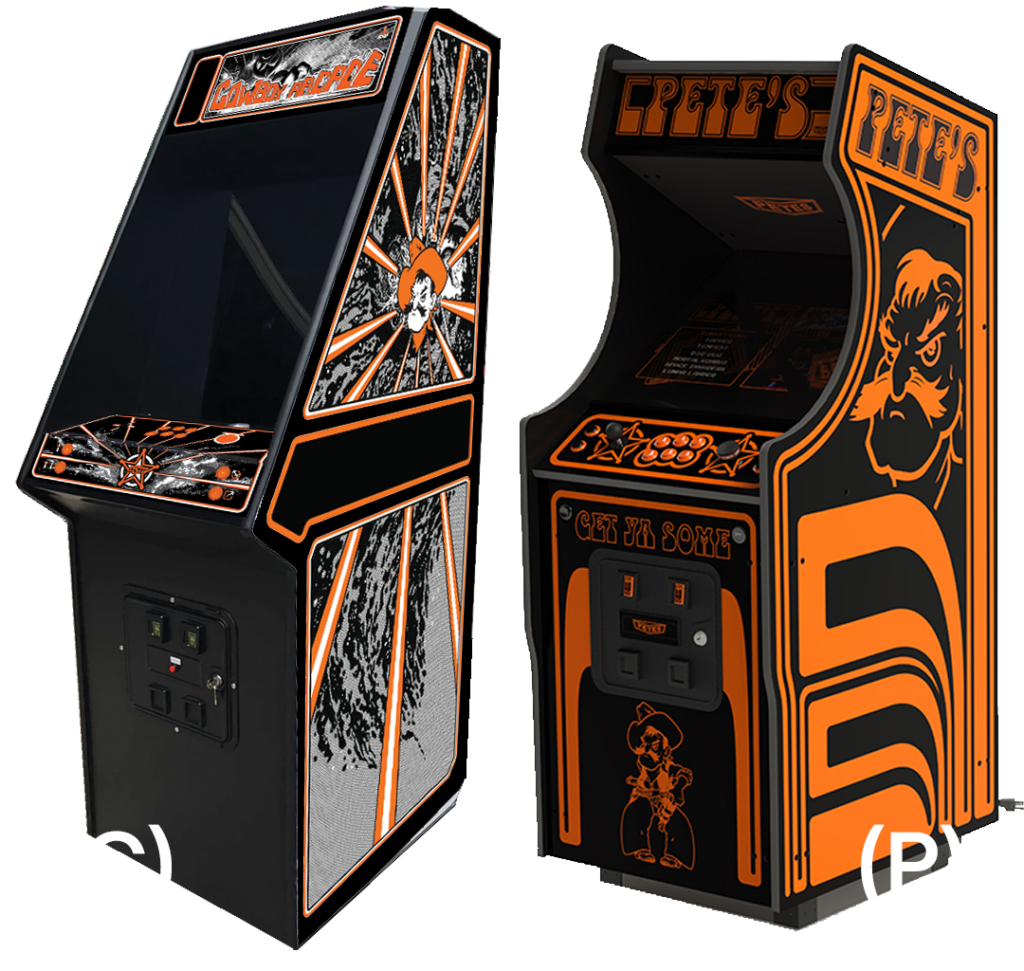
The Cowboy Arcade used an original spinner from a Tempest machine.
The frame is powder coated black. The aluminum flywheel and flywheel cap are anodized orange. All the cap screws have been replaced with stainless steel. The copper encoder wheel is polished. The bushings have been replaced with new ones from Arcade Shop and I was pleasantly surprised when they came in and were dark grey instead of baby blue like they showed on the web site! We machined a new shaft (longer) to accomodate the wood control panel. The circuit board was cleaned, checked for operation and coated, and finally we drilled and tapped holes to mount the Opti-Wiz.
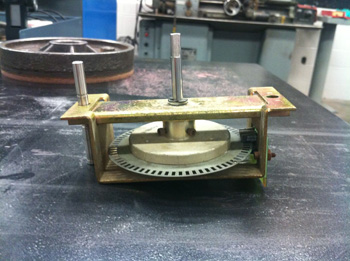
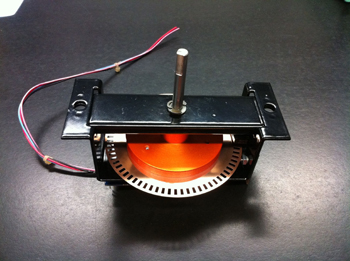
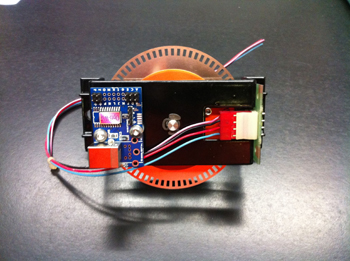
The OG Cowboy Arcade used an LED-Wiz/GP (on left) from Groovey Game Gear to take the button presses and turn them into keyboard inputs for the computer to use. It did not have the ability to read a spinner input, hence the Opti-wiz.
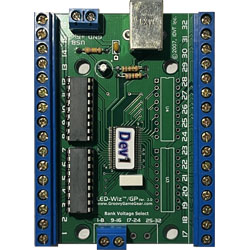
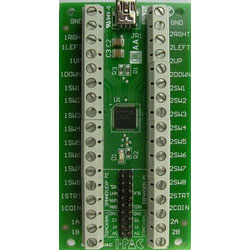
The Cowboy Arcade Redux is using and I-PAC (on right) from Ultimarc. It does handle inputs from a spinner, but there is a catch…
Spinners and Trackballs (and computer mice) used Quadrature to turn motion into signals the computer can use. Two light sources pointed at two detectors a slight distance and sometimes angled apart are bisected by a “encoder” wheel, which is a disc with holes or slots in it. As the wheel alternately interrupts and allows the light to hit the two detectors, two signals are produced which are out of phase and can be used in a Quadrature equation to determine direction and speed.
The Tempest uses “active-high” signals, meaning the “pulse” is +5VDC. More modern spinners use and “active-low” signal. The inputs from the Tempest spinner will not work on the I-PAC board which is using active-low. That is the catch. So I will still need to use the Opti-Wiz and the spinner will still be a separate USB input to the computer.
The Tempest spinner is worth the effort. My favorite game is Tempest and I want to play it with the feel of the original control. Beside, it looks awesome!
Leave a Reply
You must be logged in to post a comment.